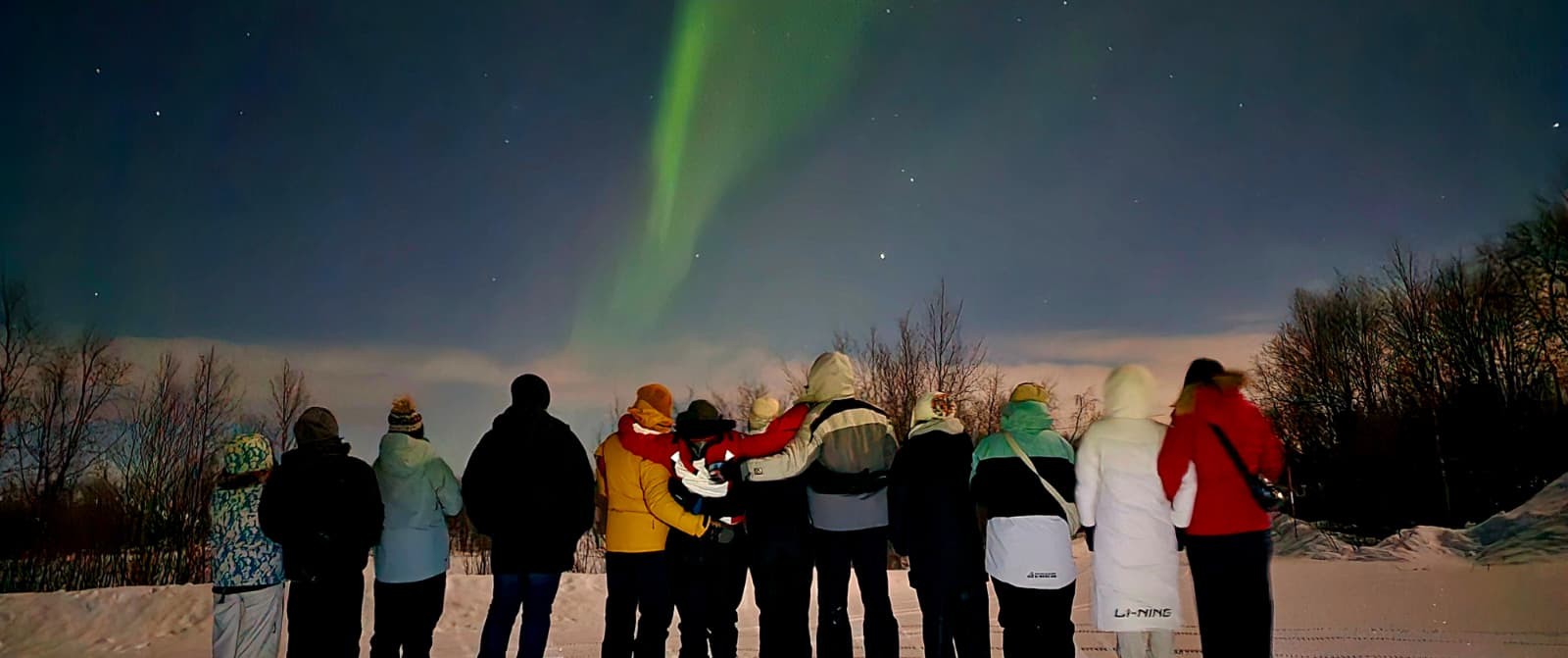
The problem: you're standing still outside for 2-3 hours in temperatures that would cause hypothermia in 20 minutes without the right gear. This is not a hike. Your body produces very little heat. Dressing correctly is the difference between "magical Arctic night" and "medical incident disguised as a memory".
The three-layer system
Base layer (closest to skin)
Merino wool long-sleeve top + long johns. Minimum weight 200 gsm. Wool regulates temperature and stays warm even when damp. Never cotton. Cotton traps sweat against your skin and then freezes — in −25°C your undershirt becomes a sheet of ice. T-shirts under a fleece don't work either.
Brands that work: Icebreaker, Smartwool, Devold, Woolpower. Expect to spend 60-90 EUR per piece.
Mid layer
Fleece or synthetic insulated jacket. This is your primary warmth layer. Needs a zipper so you can vent on the bus (you'll be miserable if you can't partially un-dress in the warm van). Good weight: 200-300 gsm fleece OR a thin down/synthetic puffy jacket.
Outer layer
Waterproof + windproof parka. Ideally down or synthetic fill. The hood matters — it should be adjustable and ideally have fur or fleece trim around the face opening to block wind. A thigh-length parka is warmer than a waist-length one (covers your kidneys).
Legs
Insulated ski trousers or salopettes over long johns. Salopettes (high-waisted with shoulder straps) are warmer because they cover your lower back. Jeans are not acceptable at −25°C — they wick cold directly to your legs.
Budget option: tracksuit bottoms over long johns under loose waterproof rain trousers. Works down to about −15°C.
Boots
Winter boots rated to −30°C with aggressive grippy soles (Vibram, Contagrip, or similar). Your hiking boots will not work. Walking boots are designed for hiking where you generate body heat. Aurora viewing is standing still.
What to look for: rubber sole, thick felt or fleece lining, removable inner boot (lets you dry them overnight), and ankle-high minimum. Brands: Sorel Caribou, Baffin Impact, Kamik Nation Plus.
Size up. Buy one full size larger than your normal shoe size so you can wear two pairs of wool socks without compression. Compressed feet = cold feet, fast.
Socks
- Inner: thin merino wool liner sock
- Outer: thick wool sock (Woolpower, Darn Tough, or similar)
No cotton socks. One in five travellers we see has packed only cotton socks and is miserable.
Hands — the most common mistake
People bring one pair of thick ski gloves and then can't use their phone camera. Then they take the glove off to photograph, and their hand loses dexterity in 2 minutes. By minute 5 it hurts. By minute 8 it's numb.
The correct setup:
- Thin liner gloves underneath (merino or synthetic). Let you operate a camera or phone.
- Insulated mittens on top (not gloves — mittens are 30% warmer because fingers share warmth).
- Take mittens off only to press the shutter. Put mittens back on immediately.
Fingerless gloves are useless at −20°C.
Check our Kiruna Northern Lights Tour → From 1490 SEK · Hotel pickup · Hot drinks + snacks · Phone photo help.Head + face
Warm hat covering the ears. Fleece or wool. If the hat doesn't cover your ears, you'll have tingly ears in 15 minutes and numb ears in 30.
Neck gaiter or buff — thin fleece tube you can pull up over your nose and mouth. Your breath freezes on eyelashes in −30°C; a gaiter deflects breath downward. This is the item most travellers don't realise they need.
Ski goggles are overkill for aurora viewing in calm conditions but genuinely helpful if there's wind.
Three things most travellers forget
- Hand warmers (disposable). HotHands or similar. 4 SEK each. Pack 4 pairs per tour night — one in each glove, one in each boot. Activates with air, lasts 6-8 hours. Game-changer.
- Thermos of hot drink. Even if the tour provides warm drinks (we do), a personal thermos lets you sip whenever you want. 250 SEK at any Kiruna outdoors shop.
- Spare camera battery kept in an inside pocket against your body. Lithium batteries drop to 20% of capacity at −25°C. Keep one warm, swap in when the outdoor one dies. Lets you shoot the whole evening.
What you do NOT need
- Thermal face masks / balaclavas: nice-to-have, not essential. Your parka hood + neck gaiter cover the face.
- Heated vests: marketing gimmick for stationary aurora viewing. Battery dies in the cold.
- Polar expedition boots (Baffin Endurance, etc.): overkill unless it's below −35°C.
- Thermal snow pants for children: a one-piece insulated suit is better and kids love them.
If you don't own the right gear
Two options:
- Rent in Kiruna. Adventure Kiruna and Nordic Outlet rent full Arctic sets (parka + trousers + boots + mittens + hat) for ~450 SEK/day. Book 24 hours ahead.
- Buy secondhand. Stadium Outlet in Kiruna has ex-hire parkas at 600-900 SEK. Cheaper than one day's rental if you plan 3+ outdoor nights.
Some tour operators include thermal suits in the price. We (Aurora Dreams) do not by default — check our safety and gear policy for details. If you want gear included, book with an operator that specifies this upfront.
Weather-specific adjustments
- September or early April (−5 to +5°C): drop one mid-layer, regular winter coat is fine.
- October or March (−10°C): standard setup above works perfectly.
- November-February (−20 to −30°C): full setup + hand warmers + thermos.
- Extreme cold (−30°C or colder): add a second hat, face covering, and check tour runs — some operators cancel below −35°C.
Check the live Kiruna weather forecast the day before your tour to fine-tune what to pack.
Book with us — warm drinks and snacks included → You bring the clothes, we handle the rest. From 1490 SEK per adult.